


Long Now Boston fosters long-term thinking on the local and global level. We want to become a critical resource connecting the region’s domains of technology, arts, culture, commerce, science, and environmentalism. We encourage individual and collective responsibility in a time-scale of the next ten thousand years, and offer tools and resources to our future leaders.
Speakers
Aeron Hodges, AIA, Principal at Stantec, is a leader in housing innovation whose practice unites forward-thinking research with built work in urban multifamily and affordable housing. As a recipient of the Plym Travel Fellowship, she translated European social housing strategies into U.S. contexts through both policy advocacy, helping shape Boston’s compact living pilot policy, and hands-on projects that deliver equitable, sustainable homes under complex real-world constraints. Aeron’s portfolio demonstrates how design excellence, technology, and adaptability can drive transformative outcomes.

Alex Murray has worked in many capacities during his career, as a restaurant sommelier and manager, as a wholesale salesperson and marketing manager, as an adjunct professor of wine at Boston University, and for the past eight-plus years helping manage the wine program at Legal Sea Foods. He’s visited many of the world’s principal wine regions, and has also taught bread baking classes. Alex lives in Quincy with his wife, Jessica and their daughter Pramila and son Santosh.
Adjunct professor of wine at Boston University

Alex Zhuk is cofounder, President and Director of climate-tech company Perennial.Earth, Perennial, which builds technology to unlock soil as the largest sink to reduce global warming. A graduate of Brown University, Alex lives in Boulder CO. The Perennial Team has raised $25M in funding from top climate, food and technology investors including Microsoft, and Perennial’s Soil-Based Carbon Removal Verification Platform was listed by TIME magazine a Best Invention in 2022.
Cofounder, President and Director of Perennial

Alex is an energetic and hardworking marketing professional, with ten years of experience in digital marketing, strategy, website development, and advertising. Currently he works for a digital marketing agency where he helps set the foundation of each project and works to establish budget, goals, strategic ideas and technical requirements. Alex is a creative thinker with exceptional communication skills and the ability to lead cross-functional teams from project initiation to completion.
Marketing and Communications Professional


Andrew H. Knoll is the Fisher Research Professor of Natural History at Harvard University. Andrew attended Lehigh and Harvard and has served on the faculty of Oberlin and Harvard, where he has served as chair of the Department of Organismic and Evolutionary Biology and Associate Dean of the Faculty of Arts and Sciences. An award-winning educator and author, Andy’s research focuses on the early evolution of life and Earth’s Precambrian environmental history. He has served on a number of Boards and Commissions, including the Board of the National Museum of Natural History and the subcommittee of the International Commission of Stratiography that established the Ediacaran Period. His latest book is A Brief History of Earth: Four Billion Years in Eight Chapters (02021)
Fisher Research Professor of Natural History, Harvard University

Andrew L. Russell is a professor of history and the dean of the College of Arts and Science at SUNY Polytechnic Institute. With Lee Vinsel, he is a founder of the Maintainers research network and conferences, and authors of The Innovation Delusion. Their work and writing on the topic of maintenance have appeared in the New York Times, The Atlantic, The Washington Post and WIRED magazine.
Professor of History and dean of the College of Arts and Science at SUNY Polytechnic Institute.

Dr. Anton Howes is the head of innovation at the Entrepreneurs Network, and Historian in Residence at the Royal Society for the Encouragement of Arts, Manufactures and Commerce (RSA). Dr. Anton Howes is the head of innovation at the Entrepreneurs Network, where he translates his research into practical policy proposals.. Dr. Howes was a postdoctoral researcher at Brown University and subsequently held the position of assistant professor in economic history at King’s College in London, where he received his Ph.D. His recent book, Arts and Minds: How the Royal Society of Arts Changed a Nation, is a definitive history telling the story of Britain’s subscription-funded national improvement agency, the RSA. Dr. Howes is currently writing a book on the causes of the British Industrial Revolution, focusing on the hundreds of individual inventors and innovators who made it possible, and the institutions they created to keep it going.
Historian in Residence at the Royal Society for the Encouragement of Arts, Manufactures and Commerce (RSA)

Anuraag is the CTO/ cofounder at an early stage startup, called TechNext, based on his MIT research on technology improvement rates. Before TechNext, Anuraag was a Fellow, MIT System Design and Management and a part of an all-MIT initiative called the MIT Work of the Future Task Force. He worked for Honda R&D Japan in Tokyo at Think Lab, which helped create long term strategy for the company. Anuraag also worked briefly at the Department of Science & Technology Center for Policy Research at IIT Delhi, where he did innovation policy research, particularly innovation assessment and incubators. He loves playing soccer in his free time.
CTO/ cofounder of TechNext

Abraham (Avi) Loeb is the Frank B. Baird, Jr. Professor of Science at Harvard University. He has published 4 books and over 700 papers on a wide range of topics, including black holes, the first stars, the search for extraterrestrial life and the future of the universe. He serves as chair of Harvard’s Department of Astronomy, founding director of Harvard’s Black Hole Initiative and director of the Institute for Theory and Computation within the Harvard-Smithsonian Center for Astrophysics. He is a Faculty Member of Harvard’s Origins of Life Initiative. He also chairs the advisory committee for the Breakthrough Starshot Advisory Committee, serves as the science theory director for all initiatives of the Breakthrough Prize Foundation, as well as chair of the Board on Physics and Astronomy of the National Academies. He is an elected fellow of the American Academy of Arts & Sciences, the American Physical Society, and the International Academy of Astronautics.
Frank B. Baird, Jr. Professor of Science at Harvard University

Barry Bluestone, Ph.D., is a Professor Emeritus of Political Economy in the School of Public Policy and Urban Affairs at Northeastern University. He served as founding director of the Dukakis Center for Urban and Regional Policy from 1999 to 2015, and founding dean of the School of Public Policy and Urban Affairs from 2006 to 2012. Bluestone has led research projects on housing, local economic development, state and local public finance and manufacturing sector and has been lead author on each of the fifteen editions of the annual Greater Boston Housing Report Card. Bluestone has written widely on economic and social issues and contributes regularly to academic, as well as popular journals. He is the author of eleven books, including The Deindustrialization of America (1982), Growing Prosperity: The Battle for Growth with Equity in the 21st Century (2000), and The Boston Renaissance: Race, Space, and Economic Change in an American Metropolis (2000), and The Urban Experience: Economics, Society, and Public Policy (2008). He appears frequently on local and national radio. Bluestone is also a founding member of the Economic Policy Institute, along with Robert Reich, Lester Thurow, Robert Kuttner, Ray Marshall, and Jeff Faux.
Ph.D., Professor Emeritus of Political Economy at Northeastern University.

Ben Soltoff is a systems thinker who is passionate about exploring how new ideas, technologies, and business models can address the world’s most pressing problems, particularly climate change and other environmental challenges. At the Martin Trust Center, Ben is the point person for all things climate tech, and he leads the delta V accelerator, the capstone entrepreneurial experience for students at MIT. Ben served as the Environmental Innovation Manager at Yale, helping students design, build, and launch environmental solutions and he has been part of several environmentally relevant startups. Ben holds dual master’s degrees from the Yale School of Management and the Yale School of the Environment, as well as a Bachelor of Science degree from Duke University. You’ll also find him writing away at Flourish Fiction on substack.
Entrepreneur in Residence (EIR) and Ecosystem-Builder at the Martin Trust Center

William M. Bulleit is an emeritus professor of structural engineering in the Department of Civil, Environmental, and Geospatial Engineering at Michigan Tech in Houghton, MI located in Michigan’s Upper Peninsula. Prior to going to Michigan Tech, he designed submersibles in Florida and bridges in Washington. His major research area for many years was structural reliability. This research led him to consider the more philosophical aspects of making decisions under uncertainty. He was one of the original members of the ASCE/SEI Engineering Philosophy Committee and is its most recent past chair. He has written about how different levels of uncertainty affect the way decisions need to be made in order to be effective, safe, and ethical. Within these writings is the concept of the Engineering Way of Thinking, a way of making decisions that is applicable beyond engineered technological systems.
Structural Engineer and Philosopher

After a long career in printing and digital imaging technology development, Bill Davison devotes much of his time to making images at his studio where he pursues photography and digital printmaking. Since 02015, he has also been dedicated to establishing Long Now Boston as a Boston-area resource for those interested in long-term thinking and responsibility. In his previous life he founded Point Balance, Inc. and Meta4 Imaging, both consulting resources serving digital image processing firms and high-end commercial printers. He received his degree in Philosophy from Haverford College.
Founder, Board Chair & Treasurer

Bina Venkataraman is the Editorial Page Editor of The Boston Globe, a fellow at New America, and has taught at MIT. She is the author of The Optimist’s Telescope, named a best book of the year by Amazon, Science Friday, and National Public Radio. Bina spoke with Long Now Boston in March of 2020: Long Term Thinking in an Age of Recklessness.
Editorial Page Editor of The Boston Globe.

Bryan Agurcia has an undergraduate degree in exercise physiology, a Masters in gerontology and 30 years experience in human performance. An accident at 15 years old started his journey learning what is possible when you challenge your body. He systematically designs a client’s aging process by advising clients on a passage to thriving and flourishing with each passing year. He calls himself an Intelligent Aging Strategist / Coach.
Intelligent Aging Strategist / Coach

Bruce Blumberg is a Principal UX Engineer at Universal Robots, the world’s leading collaborative robot manufacturer. Previously, he was Research Fellow at Rethink Robotics, and held management positions at the MIT Media Lab, Blue Fang Games, Apple Computer and NeXT Computer. At Universal and Rethink, Bruce helped usher in the new age of collaborative robots. Rather than being caged for safety and programmed for a single purpose, collaborative robots are designed to be safe, small and economical and to work side by side with people. At Blue Fang, Bruce led the development of expressive, intelligent and engrossing animal characters, raising the bar for digital entertainment. Bruce was an associate professor at The MIT Media Lab and served as director of the Synthetic Characters Group leading groundbreaking research on behavior, learning and motor control for autonomous animated characters. Bruce earned an MS in management from the MIT Sloan School of Management and a PhD in media arts and sciences from the MIT Media Lab.
Roboticist

Bruno Carvalho's interdisciplinary approaches tend to bridge history, literary analysis, urban design, landscape architecture, and the social sciences concerned with cities. His award-winning Porous City: A Cultural History of Rio de Janeiro was published in Brazil in a revised and expanded edition. He co-organized a critical edition in Portuguese of United States constitutional documents, which circulated across the Atlantic and played a role in independence movements. Carvalho is also editor of Portuguese Literary and Cultural Studies: The Eighteenth Century, and co-editor of Occupy All Streets: Olympic Urbanism and Contested Futures in Rio de Janeiro (2016).
Harvard Professor of Romance Languages and Literatures
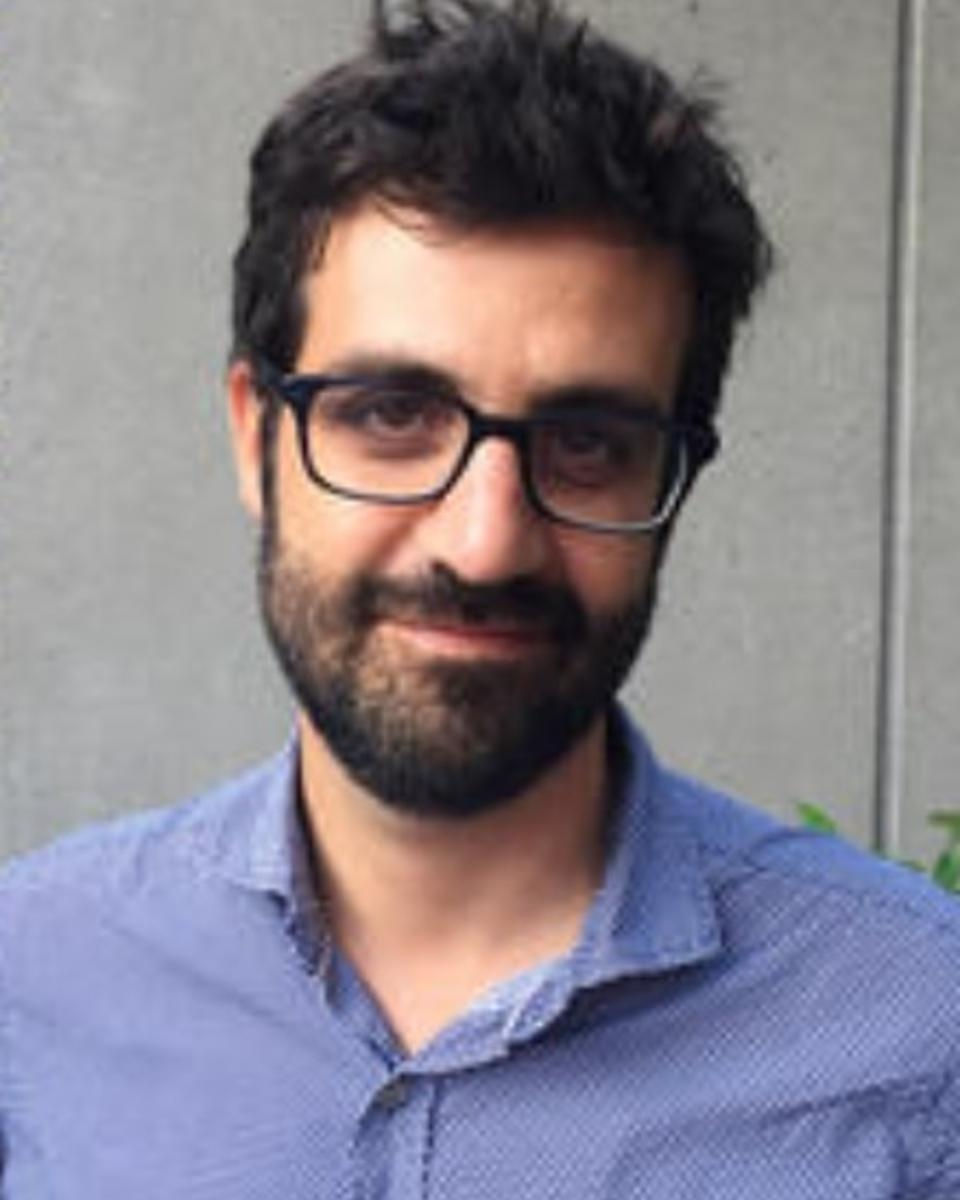
Cannupa Hanska Luger is a New Mexico-based, multi-disciplinary artist. Raised on the Standing Rock Reservation in North Dakota he is of Mandan, Hidatsa, Arikara, Lakota, Austrian, and Norwegian descent. Through monumental installations that incorporate ceramics, video, sound, fiber, steel and repurposed materials, Luger interweaves performance and political action to communicate stories about 21st century Indigeneity. Luger lectures and produces projects around the globe and his work is collected internationally. He is a 2019 recipient of the Joan Mitchell Foundation Painters & Sculptors Grant, a 2019 Yerba Buena Center for the Arts Honoree and the recipient of the 2018 Museum of Arts and Design’s inaugural Burke Prize. Luger holds a BFA in studio arts from the Institute of American Indian Arts.
Artist

Dr. Catherine Walker is a Glaciologist and Planetary Scientist with the Woods Hole Oceanographic Institution working on polar, ocean and planetary exploration. Catherine saw Apollo 13 when she was 10 years old and decided to be an astronaut, a goal which she has not yet given up. She received a Bachelor's degree in Astronomy (and a minor in Earth Sciences) from Mount Holyoke College, and a Ph.D. in Atmospheric Oceanic and Space Sciences from the University of Michigan. As a postdoctoral scholar at Georgia Tech and NASA’s Jet Propulsion Lab, Catherine studied ice-ocean interactions on Earth and across the many Ocean Worlds of the solar system. At WHOI, she continues her work to understand these extreme environments using satellites and work in the field, most recently diving to the seafloor in the Human-Occupied Vehicle (HOV) Alvin in 2022.
Assistant Scientist, Applied Ocean Physics & Engineering

Christine Webb is a broadly trained primatologist at Harvard’s Department of Human Evolutionary Biology, with expertise in social behavior, cognition, and emotion. She works with nonhuman primates in diverse settings and collaborates with scholars from the social sciences and humanities to reimagine the role of science in the growing charge to grant moral status to other animals. Her work has been covered by popular outlets including The New York Times, The Washington Post, National Geographic, and the BBC.
Primatologist at Harvard’s Department of Human Evolutionary Biology

Christopher Fry moved to Boston in 1973 to attend Berklee College of Music (the MIT of Jazz). He’s worked at BBN, IBM, MIT’s Experimental Music Studio, Sloan (business) school & Media Lab and a host of start-ups. His latest language and development environment is to help makers describe processes for robots to make anything.
Musician, Robotic Language and Development
Christopher Haines is an NCARB certified Architect, specializing in regenerative design for building renovations and urban spaces, integrating both Passive House and Living Building Challenge perspectives. He weaves this professional focus with academic curiosity. He has spent the last several years investigating the intersection of biodiversity and the built environment to better understand natures’ designs. He has investigated requirements for a socially and technically regenerative society, taught urban sustainability, environmental management and architectural technology at universities and have pursued studies in higher education sustainability curriculum, urbanism, brain science, the social and ecological impacts of a growth economy and techno-philia & sustainability.
NCARB certified Architect
Chris Osgood serves as the Director of the Office of Climate Resilience and Mayor Michelle Wu’s Senior Advisor for Infrastructure.
The Office of Climate Resilience leads the City’s all-of-government response to the challenges of coastal flooding, stormwater flooding and heat. Located within the Environment, Energy, and Open Space Cabinet, this Office partners with City Departments to set resilience priorities, to track and communicate progress, and to lead critical projects that make Boston’s neighborhood even more resilient.
In addition to overseeing this critical work, Chris also works with a range of Cabinets to manage a targeted set of long-term infrastructure projects.
Chris first joined the City of Boston team in 2006 and has served in a range of roles. Those include Mayoral Advisor, co-founder and co-chair of the Mayor’s Office of New Urban Mechanics, Chief of Streets, and Chief of Staff. Across all of these roles, Chris has focused on collaborating with colleagues and constituents to deliver tangible benefits to the public.
A resident of Jamaica Plain, Chris is an alum of City Year, Haverford College, and the Harvard Business School.
Director of the Office of Climate Resilience, Boston MA

Cristina Parreño Alonso is an architect, designer, and educator at the School of Architecture and Planning at MIT where her research Transtectonics explores cultural and environmental implications of expanded temporal sensibilities in architectural material practice. Her tectonic translations—material transfers across mediums and temporal scales, human and more-than-human—embody narratives that are told in the form of essays, exhibitions, and through architectural projects and installations that activate public spaces. Her firm, Cristina Parreño Architecture, has won several awards and architectural competitions. In 2014 she obtained the European award “40 under 40”. In 2015 she was selected emerging firm at the “Design Boston Biennial” where she exhibited her piece “Tectonics of Transparency: The Tower”. In 2017 she was selected by the City of Boston to install the permanent art installation “Deep Time Stories of JP” in the Hyde Square of Jamaica Plain in Boston. Her work was on view at the Schusev State Museum of Architecture in Moscow, in 2020, and she is one of the architects exhibiting in La Biennale di Venezia, 2021. As well as MIT Cristina has taught design studios at the State University of NY at Buffalo and Harvard GSD.
Architect, designer, and educator at the School of Architecture and Planning at MIT Speaker

Curt Newton is Director of MIT OpenCourseWare, which freely shares materials from thousands of MIT courses used by millions of learners and educators around the world. Prior to joining OCW in 2004, he worked at AT&T/Lucent Bell Labs as a communications network systems engineer and co-founded a data network equipment startup. Curt serves on the steering team of 350 MA and is a trained Climate Reality Project Leader. Curt co-produced and co-hosted 3 seasons of the Climate Conversations podcast; helped launch and build the ClimateX online climate change community that became MIT’s climate portal; and was staff representative on the MIT Climate Action Advisory Committee. Curt’s participation in a 2016 World Climate Simulation game introduced him to Climate Interactive’s work. He learned to facilitate World Climate, with a personal interest in reaching high school communities (being a parent of two young people). He has facilitated En-ROADS games and workshops for high school classes and enrichment programs, graduate-level education students, a global network of education innovators, workplaces, citizens, and the MIT community.
Director of MIT OpenCourseWare

Dan Borelli is an Artist and Director of Exhibitions at Harvard University, Graduate School of Design (GSD). His art practice focuses on environmental justice, contaminated communities, and how research-based art can address shared traumas. As part of his Master studies at the GSD, Dan started an art-based research inquiry into the Nyanza Superfund Site in Ashland Massachusetts, which is his hometown. Nyanza is one of the first 10 sites that launched the EPA’s Superfund program and Dan’s project makes public hidden narratives of cancer clusters, human loss, activism, and ultimately regeneration with the support of Harvard Innovation Learning Technology, ArtPlace America and NEA Our Town grants.
Director of Exhibitions, Harvard GSD

Danny Hillis is an American inventor, entrepreneur, scientist, and writer who is particularly known for his work in computer science. He is best known as the founder of Thinking Machines Corporation, a parallel supercomputer manufacturer, and subsequently was a fellow at Walt Disney Imagineering. Hillis co-founded Applied Minds, the technology R&D think-tank, and is co-founder of Applied Invention, an interdisciplinary group of engineers, scientists, and artists that develops technology solutions in partnership with leading companies and entrepreneurs. Hillis is a visiting professor at the MIT Media Lab, the Judge Widney Professor of Engineering and Medicine at the University of Southern California, Professor of Research Medicine at the Keck School of Medicine of USC, and Research Professor of Engineering at the USC Viterbi School of Engineering. He is the principal investigator of the National Cancer Institute’s Physical Sciences in Oncology Laboratory at USC.
Inventor, entrepreneur, scientist, and writer.

Danny Warshay is beloved teacher and mentorof entrepreneurship at Brown University, and the Author of See, Solve, Scale: How Anyone Can Turn an Unsolved Problem into a Breakthrough Success (2022). Danny leads creative and thought-provoking workshops on entrepreneurship throughout corporate, academic, startup and governmental contexts throughout the United States, and in China, Egypt, Portugal, Bahrain, Slovenia, South Africa, Jordan, Palestine, Israel, the UK, and Jamaica. He began his own entrepreneurial pursuits while an undergraduate at Brown as a member of the startup leadership team of Clearview Software, which was acquired by Apple. He earned an M.B.A. from Harvard Business, and has co-founded and sold companies in fields ranging from software and advanced materials to consumer products and media. His course at Brown, The Entrepreneurial Process, has been recognized as the highest-rated course on campus.
Professor and Executive Director, Nelson Center for Entrepreneurship at Brown University.

Danya Glabau is a medical anthropologist and STS scholar researching health activism, the medical economy, and how human bodies become valuable data. She directs the Technology Ethics undergraduate curriculum at NYU Tandon School of Engineering and also teaches in the Integrated Design and Media graduate program. She earned her PhD from the Department of Science and Technology Studies (STS) at Cornell University.
Her first book, Food Allergy Advocacy: Parenting and the Politics of Care (2022, University of Minnesota Press), examined how food allergy activists get involved in scientific research and political advocacy, and how race, class, and gender shape their advocacy goals. Her second book, Cyborg (2024, MIT Press; co-authored with Laura Forlano, Northeastern University), offers a 21st century introduction to cyborg theory in contexts like work, medicine and disability, art and design, and feminist theory. Her latest research investigates how new parents use parenting advice, with a focus on how digital resources, apps, and devices shape modern ideas about what makes a “good” parent.
Industry Assistant Professor in the Department of Technology, Culture and Society at the Tandon School of Engineering at New York University

An award-winning reporter, documentary filmmaker, and professor of journalism, David Abel has covered war in the Balkans, unrest in Latin America, national security issues in Washington D.C., terrorism in New York and Boston, and climate change and poverty throughout New England.
A longtime reporter at The Boston Globe, Abel is also a professor of the practice in the journalism department at Boston University.
Abel and his colleagues at the Globe won a Pulitzer Prize for their coverage of the Boston Marathon bombings. His films have been broadcast on the Discovery Channel, PBS, BBC World News, and other major platforms, winning numerous awards. His most recent film, “Entangled,” won a Jackson Wild award, known as the Oscars of nature films, and was nominated for a national Emmy. Abel’s work has also won an Edward R. Murrow award, the Ernie Pyle award from the Scripps Howard Foundation, and Sigma Delta Chi awards for feature reporting and climate reporting.
Reporter, documentary filmmaker, and professor of journalism

Dr. David Barzilai is a globally recognized longevity physician, CEO of Barzilai Longevity Consulting and founding faculty member and Trustee of the Geneva College of Longevity Science.
He serves as a lecturer at Harvard Medical School, holds dual doctorates (MD/PhD), and is board-certified in lifestyle medicine as a Diplomat of the American Board of Lifestyle Medicine (DipABLM)
A frequent keynote speaker at major scientific and medical conferences, Dr. Barzilai is known for translating cutting-edge research into practical, high-impact interventions.
Through Agingdoc.com, he delivers personalized, evidence-based longevity consultations to individuals and institutions, integrating advanced scientific and clinical insights to extend and optimize healthspan.
To connect with Dr. Barzilai as a keynote speaker, scientific and business strategy advisory board member, or consultant in longevity medicine and evidence-based practices, visit his LinkedIn profile: linkedin.com/in/agingdoc
CEO of Barzilai Longevity Consulting
.png)
David Colby Reed is a PhD student at the MIT Media Lab, where he is a member of the Space Enabled research group and cofounder of the Space Governance Collaborative. His research focuses on designing participation, voice, and equity into the architectures of complex systems like law, economies, and technologies.
PhD student, MIT Media Lab.

David Hibbett is a Professor of Biology at Clark University, Worcester, Massachusetts. USA. He received a B.S. in Botany from the University of Massachusetts, Amherst, and a PhD in Botany from Duke University. He held postdoctoral fellowships at the Tottori Mycological Institute (Japan) and the Harvard University Herbaria. He joined the faculty of Clark Universty in 1999.
Professor Hibbett’s scholarship focuses on evolutionary biology of fungi, particularly mushroom-forming fungi. His research encompasses molecular systematics and evolution, comparative genomics, developmental biology, and paleomycology. He is also interested in principles of biological classification, including rank-free taxonomy and DNA-based species description. Hibbett’s research has been supported by the US National Science Foundation and the US Department of Energy. He has served as President of the Mycological Society of America and Executive Vice President of the Society of Systematic Biologists. He has published over 150 research articles and was designated a Clarivate Analytics/Web of Science Highly Cited Researcher in 2018 and 2020. He is a Fellow of the Mycological Society of America, the American Association for the Advancement of Science, and the Radcliffe Institute for Advanced Study of Harvard University. In 2023, he was appointed as the Andrea B. and Peter D. Klein Distinguished Professor of Clark University.
Professor of Biology, Clark University

Dennis Grishin is the Chief Science Officer and co-founder (with George Church and Kamal Obbad) of Nebula Genomics. Dennis is a Boehringer Ingelheim PhD Fellow in Genetics and Genomics at Harvard University and a Fellowship recipient from the German National Academic Foundation. He earned a Master’s in Computer Science from Harvard University and a Bachelor’s Degree in Microsystems Engineering from the University of Freiburg.
Chief Science Officer and co-founder of Nebula Genomics.

Diane E. Davis is the Charles Dyer Norton Professor of Regional Planning and Urbanism and former Chair of the Department of Urban Planning and Design at Harvard’s Graduate School of Design (GSD). She also is the director of the Mexican Cities Initiative at the GSD, and faculty chair of the committee on Mexico at the David Rockefeller Center for Latin American Studies at Harvard. Davis’s research interests include the relations between urbanization and national development, urban governance, urban social movements, and informality, with a special emphasis on Mexico. Her books include Transforming Urban Transport (Oxford: 2018), among other titles.
Harvard Professor of Regional Planning and Urbanism, GSD

Donna Riley is Kamyar Haghighi Head of the School of Engineering Education and Professor of Engineering Education at Purdue University. Riley’s research focuses on the integration of ethics, communication, social analysis, lifelong learning, and other critical capacities in the formation of engineering professionals. She is the author of two books, Engineering and Social Justice and Engineering Thermodynamics and 21st Century Energy Problems. She is a founding faculty member of the Picker Engineering Program at Smith College, the first engineering program at a U.S. women’s college. Donna is a fellow of the American Society for Engineering Education.
Administrator, Author, and Advocate

Dr. Chanda Prescod-Weinstein (she/her) is Associate Professor of Physics and Core Faculty Member in Women’s and Gender Studies at the University of New Hampshire. Her scientific work lives at the intersection of particle physics, cosmology, and astrophysics, and while she is primarily a theoretical researcher, she maintains strong ties to observational astronomy. She was a topical convener for Dark Matter: Cosmic Probes in the Snowmass 2021 process, and she is lead axion wrangler for the NASA STROBE-X Probe Concept Study. She wants to understand the biggest story there is: the origin and history of the universe. She is also a theorist of Black feminist science studies, and in 2022 I launched the Cite Black Women+ in Physics and Astronomy Bibliography.
Associate Professor of Physics and Core Faculty Member in Women’s and Gender Studies at the University of New Hampshire
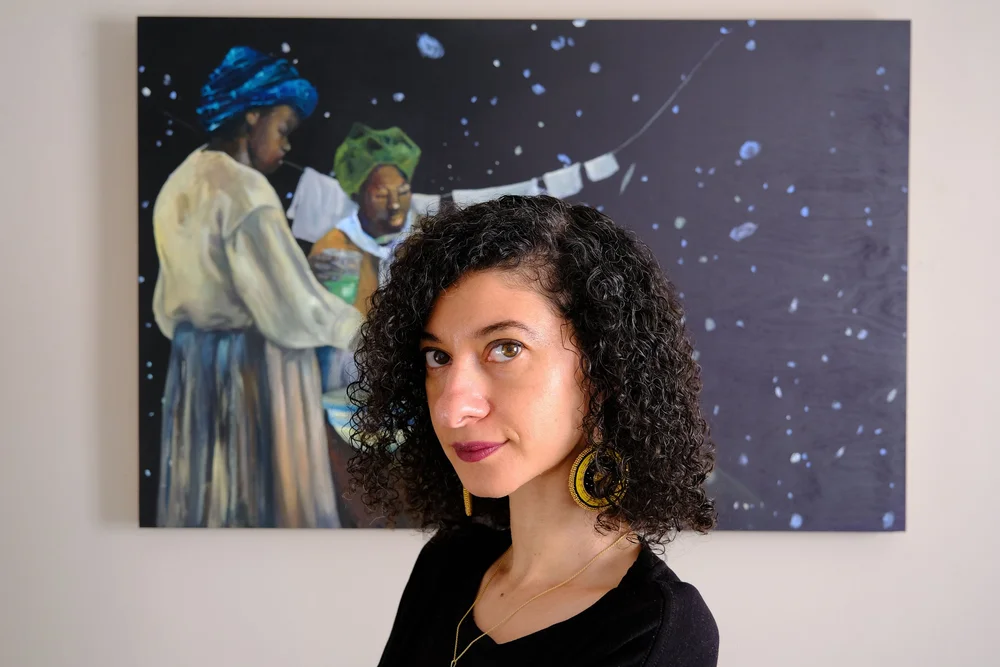
Eleanor Murphy, Director, Philanthropy and Engagement with Acumen, where she builds relationships with a variety of stakeholders to secure the resources needed to scale social enterprises and develop leaders across the globe that are tackling issues of poverty and injustice. In doing so, she is constantly evaluating some of the world’s toughest problems –from gender inequity and climate change, to the next generation of leaders – and seeking out the most innovative solutions to address them. Collaboration and partnership are core to her work (and what makes it fun!). Eleanor is a graduate of Boston University and earned a Masters in Humanities from NOHA, the Network on Humanitarian Action.
Director, Philanthropy and Engagement with Acumen

Emilia Javorski, MD, MPH, is the Director of Grants & Multistakeholder Engagements at the Future of Life Institute, and was previously names by Forbes as 30 Under 30 in Healthcare. Emilia is focused on the invention, development and commercialization of new medical therapies using a problem-focused approach. She is also an advocate for the beneficial use of emerging technologies at the Future of Life Institute and Scientists Against Inhumane Weapons. Emilia received her undergraduate degree from Columbia University, her masters from Boston University, her medical degree from the University of Massachusetts, and completed her post-doctoral research at Massachusetts General Hospital. Currently she is involved in early-stage life science ventures. She previously cofounded a skin health company, which was acquired in 2020. She was a Fulbright-Schuman Scholar to the European Union, World Economic Forum’s Global Shaper, and was previously a Forbes 30 Under 30 in Healthcare.
MD, MPH, Physician-Scientist with FLI

Esther Dyson has devoted her life to discovering the inevitable and promoting the possible. As an investor/commentator, she focuses on emerging technologies and business models, emerging markets and emerging companies. In 1994, she was one of the first to explore the impact of the Net on intellectual property in her own (paid-subscription) newsletter Release 1.0 and in Wired. In 1997, she wrote a book on the impact of the Net on individuals' lives, Release 2.0: A design for living in the digital age. Dyson does business as chairman of EDventure Holdings, the reclaimed name of the company she sold to CNET in 2004. She spends most of her time interfering with the companies listed below, most of them start-ups. In addition, she donates time and money as a trustee to emerging organizations (the Santa Fe Institute, the Sunlight Foundation, StopBadware.org and the Eurasia Foundation). From 1998 to 2000, she was founding chairman of ICANN, the Internet Corporation for Assigned Names and Numbers, the international agency charged with setting policy for the Internet's core infrastructure (technical standards and the Domain Name System) independent of government control. She also sits on the Russian government's commission to establish a Russian Silicon Valley, to which she contributes both enthusiasm and skepticism.
Writer, investor and commentator

Ethan Zuckerman is Director, Center for Civic Media and Associate Professor of the Practice at MIT’s Media Lab. He is the author of Rewire: Digital Cosmopolitans in the Age of Connection, published by W.W. Norton in June 2013. With Rebecca MacKinnon, Ethan co-founded international blogging community Global Voices. Global Voices showcases news and opinions from citizen media in over 150 nations and thirty languages. Ethan’s research focuses on issues of internet freedom, civic engagement through digital tools and international connections through media. He blogs at … My heart’s in Accra (http://www.ethanzuckerman.com/blog/) and lives in the Berkshire Mountains of western Massachusetts.
Director, Center for Civic Media, MIT Media Lab

Florencia Pierri is an Associate Curator of Science and Technology at the MIT Museum. Pierri earned their Ph.D. in history of science from Princeton University, following a BA in history and a BS in biochemistry from the University of California, San Diego. Prior to arriving at the MIT Museum, Pierri was the curator of The Sarnoff Collection, a museum dedicated to the history of communication technology at The College of New Jersey.
Associate curator of science and technology at the MIT Museum

Florian is the Professor of Vaccinology at the Icahn School of Medicine at Mount Sinai and a leading researcher on the biochemistry of viral infection, vaccines and therapeutics. He is the Principal Investigator of the Collaborative Influenza Vaccine Innovation Center (CIVIC), and directs the Krammer laboratory, part of the NIH-funded Centers for Excellence in Influenza Research and Surveillance (CEIRS). Dr. Krammer is an active peer reviewer and editorial board member of a number of leading journals and has published more than 250 scientific papers, including a proposal for preparing for the next outbreak.
Professor of Vaccinology at the Icahn School of Medicin

Fredo Darling has been in love with science and history for most of his life. Professionally, he has worked in media and communications as a Creative Director and Freelance Media Producer for the past 8 years with clients including Mass General Hospital, The New England Patriots, BMW, Aprex Biotech, and Boston College. He is currently launching a new, STEM-focused media company to promote the incredible people and fascinating projects in STEM.
Creative Director and Freelance Media Producer
Gary Oberbrunner is a technology executive and software developer with too many years’ experience in graphics, supercomputing and cloud technologies. He recently founded Dark Star Systems to help scientists tell their stories through creating beautiful videos. He spent the last two decades as CTO at GenArts, and at Thinking Machines before that. With a BSEE from MIT, he is a passionate thinker, problem solver, and communicator with interests in technology, the environment, science, philosophy, music, and the arts. He sees long-term thinking as an important catalyst for stimulating important discussions about solving our world’s biggest problems.
President and board member of Long Now Boston and CEO of Dark Star Systems

George Gantz is a retired business executive with a life-long passion for mathematics, science, philosophy and theology. He has a Bachelor of Science degree with Honors Humanities from Stanford University, and, in 2017, created Spiral Inquiry, An Exploration of Science, Faith, and Philosophy. George is a Fellow of the RSA, and a Board Member of Long Now Boston where he helps curate the Long Now Boston Conversation Series. He has submitted essays in five FQXi Essay Contests, and in April 2022 he launched a video/audio podcast series entitled “Making Sense of Complexity.”.
Writer and Philosopher

Georgie Friedman is an interdisciplinary artist whose projects include large-scale video installations, single and multi-channel videos and several photographic series. She is interested in our psychological and societal relationships to mild and severe natural phenomena. She investigates a wide range of powerful atmospheric and oceanic conditions, and is fascinated by the power of these natural elements in relationship to human fragility. She utilizes photography, video, sound, installation, engineering and the physics of light, all in order to create new experiences for viewers.
Interdisciplinary Artist

Grant Stephen is an entrepreneur, mentor and investor with a career background in using data to drive better decision making in healthcare. The co-founder & CEO of bPrescient Inc, he has leadership roles in numerous organizations across the Greater Boston area. Benefiting from a multi-disciplinary training at the University of Glasgow’s School of Engineering and the Glasgow School of Art, Grant has lived on three continents, travelled extensively and was the first person since 1919 to travel the length of the northern Silk Road.
Executive Director, Clerk, & Asst. Treasurer

Greg M. Epstein serves as the Humanist Chaplain at Harvard University, and also serves the Massachusetts Institute of Technology (MIT) as humanist chaplain and as Convener for Ethical Life at the MIT Office of Religious, Spiritual, and Ethical Life. For nearly two decades, he has built a unique career as one of the world’s most prominent humanist chaplains — professionally trained members of the clergy who support the ethical and communal lives of nonreligious people.
Described as a “godfather to the [humanist] movement” by The New York Times Magazine, Epstein was also named “one of the top faith and moral leaders in the United States” by Faithful Internet, a project coordinated by the United Church of Christ with assistance from the Stanford Law School Center for Internet and Society, for his efforts to bring together atheists, agnostics, and allies, as part of an ancient and ever-evolving ethical tradition that can be called humanism. As Greg believes deeply: in a changing world where faith in humankind has become more difficult to maintain, it is more important than ever to fight for our common humanity, and for each other.
Humanist Chaplain at Harvard University and MIT
.jpg)
Greg Kestin earned his physics Ph.D. from Harvard, as a member of The Center for the Fundamental Laws of Nature, focusing on theoretical particle physics and quantum field theory. He then joined the faculty of Harvard’s Physics Department as a College Fellow and Preceptor and is currently the Associate Director of Science Education and a Lecturer on Physics. Over his career, he has conducted research in nuclear physics, particle physics, fusion energy, gravitational wave physics, and science education. As a Digital Producer at NOVA | PBS he created award-winning media, from documentaries to educational interactives to an original video series, “What the Physics?!” In his time at NOVA |PBS, nearly a decade, he served as a director, producer, screenwriter, scientific consultant, on-screen talent, author, grant writer, animator, public speaker, and more.

Gretel A. Hartman is the CEO and owner of GetBadged.com and Police Exam Solutions and is a leader in the ongoing transformation of police reform by recruiting new candidates to the policing profession. Gretel is also passionate about treating addiction as a disease, and using proper treatments to effect a cure, versus incarceration. She is an active member of several nonprofit organizations, including the National Alliance on Mental Illness (NAMI), The Addiction Policy Forum, Faces and Voices of Recovery, Harm Reduction Coalition, and is passionate about using her business acumen to create positive change in the world. Gretel holds a Bachelor's degree in Business Administration from the University of Massachusetts Boston. You can find Gretel on LinkedIn at https://www.linkedin.com/in/gretelhartman/.
Long Now Boston Steering Committee

Guadalupe Babio is a Research Fellow at the City Science group. Graduated in 2018 by the School of Architecture of Madrid, having been visiting student in Tongji University and Technion University. She is focused on very different lines of research and work; her antidisciplinary approach fits the Media Lab philosophy: City Science, data visualization, urban mobility, building design & construction, energy simulation and building efficiency & sustainability, etc. Her research is looking to simulate the urban performance on generic cities where different distribution of the urban grid and multi-level mobility patterns take place.
Research Fellow at the MIT City Science group
Dr. Guru Madhavan is the Norman R. Augustine Senior Scholar and senior director of programs of the National Academy of Engineering where he leads and oversees activities of broad scope and complexity focused on engineering practice, education, research, communication, and policies. His books include the nonfiction Applied Minds: How Engineers Think that has been translated into many languages. For his books and lectures, he has received the American Society of Engineering Education Technological and Engineering Literacy/Philosophy of Engineering Division Meritorious Award and the IEEE-USA Award for Distinguished Literary Contributions Furthering Public Understanding and the Advancement of the Engineering Profession. He is an elected fellow of the American Association for the Advancement of Science and the American Institute of Medical and Biological Engineering.
Biomedical Systems Engineer; Maintainers Advisory Committee Member

Henry Lieberman is Research Scientist in the MIT Computer Science and Artificial Intelligence Lab (CSAIL), and has been a manufacturer of fine intellectual property for the last 40 years. He has been Principal Research Scientist at the MIT Media Lab, running the Software Agents Group.
Research Scientist, MIT Computer Science and Artificial Intelligence Lab
Hyun-A Park is a nationally recognized leader in transportation research, with more than 17 publications. She recently served as Chair of the Technical Activities Council of the Transportation Research Board (TRB), a division of the National Academies of Sciences, Engineering, and Medicine. In this role, she led a team of group and section chairs overseeing more than 200 committees and 6,000 volunteers engaged in multimodal transportation research across a broad range of topics. She also co-chaired the Women’s Transportation Seminar Public Art Project, which resulted in the installation of Network, a public art piece at Boston’s South Station.
She is President of Spy Pond Partners, LLC, a strategic consulting firm specializing in transportation performance, planning, and asset management. She began her career working with MIT Professor Tunney Lee at the Massachusetts Division of Capital Planning and Operations, and later contributed to the Central Artery/Tunnel Project (“Big Dig”) in Boston. She then joined Cambridge Systematics, where she led the firm’s business line in transportation asset management and decision support.
Hyun-A earned her Bachelors and Masters in Urban Studies and Planning at MIT. She is a member of the MIT Corporation and serves on its Governance and Nominations Committee. She also serves on the MIT visiting committees for Departments of Architecture, Civil and Environmental Engineering and the Department of Urban Studies and Planning.
President of Spy Pond Partners

Dr. Hyunjun Park is Co-Founder and CEO of CATALOG, a company on the leading edge of DNA data storage using the tools of synthetic biology. Hyunjun obtained his BS at Seoul National University, PhD in microbiology at the University of Wisconsin Madison, and conducted postdoctoral research at MIT.
CEO, CATALOG

James is Senior Principal at Stantec, where he is co-leader of Boston’s residential business unit, where he spearheads many of the firm’s large, high-profile, mixed-use projects. He brings a passion for cities to his practice of urban architecture and is a strong advocate for transit-oriented design and bike/pedestrian friendly streets.
Senior Principal at Stantec

James Hughes is a senior research fellow at the Applied Ethics Center at UMass Boston. He is a bioethicist and sociologist who serves as the associate provost for institutional research, assessment, and planning at UMass Boston. He holds a doctorate in sociology from the University of Chicago where he taught bioethics at the MacLean Center for Clinical Medical Ethics. Since then, he has taught health policy, bioethics, medical sociology, and research methods at Northwestern University, the University of Connecticut, and Trinity College. He is the author of Citizen Cyborg: Why Democratic Societies Must Respond to the Redesigned Human of the Future (2004) and is the co-editor of Surviving the Machine Age: Intelligent Technology and the Transformation of Human Work (2017). In 2005 he co-founded the Institute for Ethics and Emerging Technologies (IEET) with Oxford philosopher Nick Bostrom, and since then has served as its executive director. Hughes serves as associate editor of the Journal of Evolution and Technology, and as co-founder of the Journal of Posthuman Studies. He is also a fellow of the World Academy of Arts and Sciences, a member of Humanity+, the Neuroethics Society, the American Society of Bioethics and Humanities, and the Working Group on Ethics and Technology at Yale University, and served on the State of Connecticut's Regenerative Medicine Research Advisory Committee. He speaks on medical ethics, health care policy, and future studies worldwide.
Executive Director of the Institute for Ethics and Emerging Technologies (IEET), Senior Research Fellow at the Center for Applied Ethics at UMass Boston

James Hughes Ph.D. is a bioethicist and sociologist, and the Executive Director of the Institute for Ethics and Emerging Technologies (IEET), which he co-founded with philosopher Nick Bostrom in 2004. James also serves as the Associate Provost for Institutional Research, Assessment and Planning for the University of Massachusetts Boston. He holds a doctorate in sociology from the University of Chicago, where he also taught bioethics at the MacLean Center for Clinical Medical Ethics. He is the author of Citizen Cyborg: Why Democratic Societies Must Respond to the Redesigned Human of the Future, and from 1999-2011 he produced the syndicated weekly radio program, Changesurfer Radio.
Executive Director of the Institute for Ethics and Emerging Technologies

Jason Crawford is the founder of the Roots of Progress Institute, a nonprofit dedicated to building a culture of progress and restoring a bold, ambitious vision of the future. He writes and speaks about the history and philosophy of progress, especially in technology and industry, and his book The Techno-Humanist Manifesto is forthcoming from MIT Press. His work has appeared in the MIT Technology Review, and he has been interviewed as a spokesman for the progress movement by the BBC and Vox, and given guest lectures at MIT. He is a Founding Fellow at the Cosmos Institute and an advisor to fellows at the Foresight Institute. Formerly a software engineering manager and startup founder, he was co-founder and CEO of Fieldbook and held engineering leadership roles at Flexport, Amazon, and Groupon.
Founder
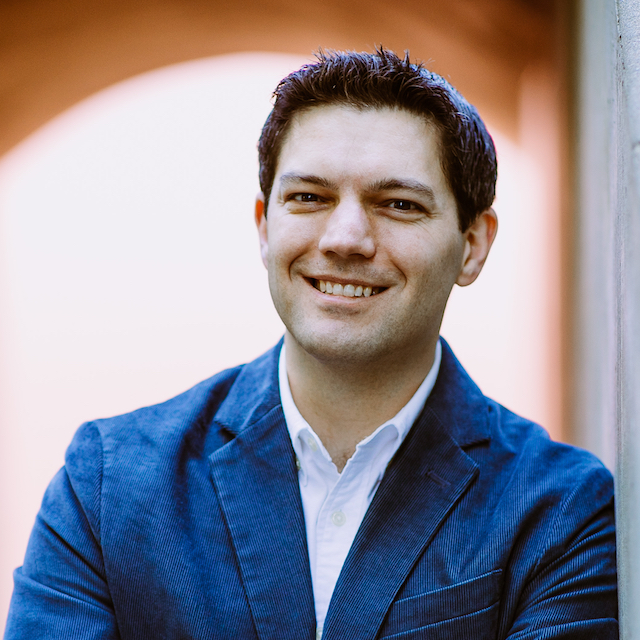
Jason Dove Mark is a veteran journalist specializing in the environment. He has written about food and agriculture, climate change and energy, biodiversity conservation, wilderness protection, and toxins and public health — and how all of those issues intersect with politics, law, and culture. From 2007 to 2015 he was editor of Earth Island Journal, and he then spent the better part of a decade as editor in chief of Sierra. He has contributed to publications ranging from The New York Times to Gastronomica to The San Francisco Bay Guardian. He is the author of Satellites in the High Country: Searching for the Wild in the Age of Man (Island Press), praised in The Wall Street Journal as "a beautiful meditation on what it means to be wild in an age when wilderness is increasingly difficult to find." His new book, The Earth Said Remember Me: How to Revive Our Memories and Restore the Planet, was published in July 2026 by W. W. Norton. He holds a degree in international relations from Georgetown University and a certificate in ecological horticulture from UC Santa Cruz. He lives with his family in greater Cascadia.
Environmental journalist and author

Jason Sydoriak works at the US DOT Volpe Transportation Center, the internal think-tank for creative solutions to transportation challenges. His assignments include research on land use planning, transportation coordination in support of disaster relief operations and Transit Oriented Design (TOD). TOD seeks to create and deploy transportation system assets to encourage compact, pedestrian-oriented, mixed-use communities. Jason began his career of public service by enlisting in the U.S. Marine Corp where he deployed to Iraq and Afghanistan, as an infantry non-commissioned officer. He earned his bachelors in Economics and Political Science from Colorado State University, and a Masters in Public Administration from the Maxwell School of Citizenship and Public Affairs, and is a Fellow of the RSA US.
Economist & Transportation Planner at the Volpe Center

Jennifer Clifford is a microbiologist and plant pathologist by training and occupation. Jennifer’s interest in science research, communication, and outreach led her to join BosLab in Somerville, MA, where she now acts as Director of Science and Outreach. BosLab is a community-built laboratory that supports DIY Biology projects, offers educational workshops, and hosts various social events. Jennifer develops and organizes various biology-based events and activities to support BosLab’s mission to provide science education and outreach to those of the Greater Boston community.
BosLab, Director of Science and Outreach
Jill Kubit is the director and co-founder of DearTomorrow. Her work has been recognized by the MIT Climate Co-Lab, the Grist 50, TED, Vox, Public Radio International, Yale, and BECC. Jill is also a founding member of the Our Kids’ Climate global climate-parent collaboration. She is focused on building three main areas on climate: creativity and culture, the parents movement, and integrating social science and practice. She advises dozens of start-up founders and leaders on social entrepreneurship and climate communications. Prior to DearTomorrow, Jill worked for 10 years to help establish the labor-climate field. She has a Master in Public Administration from the Harvard Kennedy School and a B.A. from Northwestern. Watch Jill’s TED talk about the founding of the DearTomorrow project.
Director and Founder, Dear Tomorrow

Jim Gorman is an educator and arborist and has worked at Mount Auburn Cemetery for well over a decade. Prior to his tenure at Mount Auburn, Jim was at the Arnold Arboretum and he has a very interesting perspective on the history of our landscape and a unique view of what the future might hold for spaces like Mount Auburn.
Educator and Arborist at Mount Auburn Cemetery

Dr. Jimena Canales is an expert in 19th and 20th century history of the physical sciences, working for a better understanding of science and technology in relation to the arts and humanities. Her book, A Tenth of a Second: A History explored the relation between science and history as one of the central intellectual problems of modern times. Her second book, The Physicist and the Philosopher: Einstein, Bergson and the Debate That Changed Our Understanding of Time explores the nature of time, the meaning of relativity, and the place of philosophical thought in a scientific age. She received an M.A. and Ph.D. from Harvard University in the History of Science and a BSC in Engineering Physics from the Tecnológico de Monterrey.
Scholar in the History of Science, Faculty of the University of Illinois

Joe Levine earned his PhD in Biology at Harvard University, and after teaching at Boston College, dedicated his life to improving science education and public understanding of science. Following a fellowship in Science Broadcast Journalism at WGBH, he produced science features for NPR’s Morning Edition and All Things Considered, served as science advisor to NOVA, science advisor for several WGBH Science Unit projects, and helped launch Discovery Channel’s Discover Magazine. He co-authors the most widely used high school biology textbook in the United States, and is active internationally in providing professional development for science teachers. Joe was recently elected as a fellow of the American Association for the Advancement of Science in recognition for his work championing evolution and climate change education in public schools.
PhD in Biology; Science Educator

John Goodman is a designer and builder who makes things with bits and atoms. His questions about time led to his creation of the annosphere, a mechanical sundial.
Long Now Boston Steering Committee

John Hayes is a seasoned technology executive with extensive experience in managing projects and leading teams to success. He has led the development of cutting-edge technology products and services, including mobile and web applications, cloud computing solutions, and artificial intelligence systems. John is also deeply committed to using technology to drive positive social change. He has been involved in a number of nonprofit organizations, including Mass Challenge and the Electronic Frontier Foundation, and is passionate about using technology to improve the lives of people around the world. John holds a Bachelor's degree in Electrical Engineering from the University of Notre Dame. You can find John on LinkedIn at https://www.linkedin.com/in/h4y3s/
Long Now Boston Steering Committee

John is a self-described novelist & essayist, Silicon Valley survivor, construction laborer and retired volunteer firefighter. He writes fiction and non-fiction about technology and the people who swear by it (and at it), about science & civilization, and especially about the convergence of biological & digital technologies.
Novelist & essayist, Silicon Valley survivor, construction laborer and retired volunteer firefighter.


Jonathon Keats is an artist, writer, and experimental philosopher, and a Long Now Research Fellow. His conceptually-driven transdisciplinary projects explore all aspects of society, adapting methods from the sciences and the humanities. He has exhibited and lectured at dozens of institutions worldwide, from the Los Angeles County Museum of Art to Stanford University to the Triennale di Milano, and from SXSW to CERN to UNESCO. He is the author of six books on subjects ranging from science and technology to art and design — most recently You Belong to the Universe: Buckminster Fuller and the Future (Oxford University Press) — and has written a weekly art and design column for Forbes. His long-term, deep-time projects include clocks and calendars calibrated by the growth of bristlecone pine trees, developed in collaboration with the Long Now Foundation and the Nevada Museum of Art.
Artist, writer, and experimental philosopher

Juan Enriquez is a leading authority on the economic impact of life sciences and brain research on business and society as well as an entrepreneur. He was the founding Director of the Harvard Business School's Life Sciences Project and was a research affiliate at MIT’s synthetic neurobiology lab. He then co-founded Excel Venture Management and helped build the world's first synthetic life form, programmable cells, RNA desktop printer, stapled peptides, and portable MRI reader. As a business leader and renowned speaker, Juan builds companies and works with the CEOs of a number of Fortune 50 companies, as well as various heads of state, on how to adapt to a world where the dominant language is shifting from the digital towards the language of life. Author and co-author of multiple bestsellers including As the Future Catches You: How Genomics Will Change Your Life, Work, Health, and Wealth (1999), The United States of America: Polarization, Fracturing and Our Future (2005), Evolving Ourselves: Redesigning Humanity One Gene at a Time (2015), and Right/ Wrong: How Technology Transforms Our Ethics (2020). He is a TED All-Star. Mr. Enriquez serves on multiple for-profit boards as well as a variety of non-profit boards including The American Academy of Arts and Sciences, WGBH, Questbridge, Cortico, and Harvard’s David Rockefeller Center, as well as strategic councils at the National Academies of Science and Medicine. He graduated from Harvard with a B.A. and an M.B.A., with honors.
Author, Academic, Technologist, Investor

Julia Sklar is an editor and award-winning science journalist with nearly 15 years of experience. Most recently she served as story editor for Sierra magazine, commissioning and editing coverage of climate science, public health, environmental justice, conservation, and Indigenous affairs. She currently supports the Ag & Water Desk as a part-time expert journalist and editor. Earlier in her career she reported on science, health, food, and technology for National Geographic, The Boston Globe, Curbed, Lenny Letter, Undark Magazine, and others, including year-long "bookazine" reporting projects for National Geographic on neuroscience and stress science. Her career began as MIT Technology Review's first multimedia editor. She has taught science journalism at Johns Hopkins and MIT, and holds a master's in science journalism from Boston University and bachelor's degrees in brain and cognitive sciences and anthropology from the University of Rochester.
Editor and science journalist

Kai Whiting is a co-author of Being Better: Stoicism for a World Worth Living In. He is a researcher and lecturer in sustainability and Stoicism based at UCLouvain, Belgium. He Tweets @kaiwhiting and is a co-founder of theWalledGarden.com, a place for Stoic community, discussions, and mentorship! He is also the co-founder of Wisdom Unlocked, a non-profit organization that uses Stoic principles to help people cultivate good character in difficult circumstances.
Researcher of Stoicism and Author

Kate Reed built her first wearable device when she was 13, before the introduction of the Apple Watch. Since then, she has designed, engineered and built hundreds of wearable computers. Kate was the first graduate of the MIT-backed NuVu Studio and earned dual undergraduate degrees from Brown University and The Rhode Island School of Design. Kate allows nature to grow in computational space by modeling the processes and systems of nature to create algorithms that allow for predictable and replicable growth. She is Director of Design with the Arch Mission Foundation and the inaugural Artist in Residence at Dassault Systemes. Her designs and inventions have been featured at the White House, New York Fashion Week, Boston Fashion Week, the Museum of Design Atlanta, the Boston Children’s Museum, the Hackaday Superconference, the MIT Museum, and more.
Design Director of Arch Mission


Katherine Ouellete is a writer, communications specialist, and open learning advocate at MIT Open Learning. She is interested in transforming teaching and learning through the innovative use of digital technologies. Katherine creates content on several cutting edge technologies for the MIT Open Learning newsletter and is also a freelance contributor for WBUR.
MIT Open Learning

Dr. Kerry Emanuel is a prominent meteorologist and climate scientist who specializes in moist convection in the atmosphere, and tropical cyclones. His research interests focus on tropical meteorology and climate, with a specialty in hurricane physics. His interests also include cumulus convection, the role of clouds, water vapor, and upper-ocean mixing in regulation of climate, and advanced methods of sampling the atmosphere in aid of numerical weather prediction.
Professor Emeritus of Atmospheric Science, MIT

Kerry Tribe is a visual artist and experimental documentarian born in Boston and based in Los Angeles. Her work has been featured in solo exhibitions at SFMOMA; The High Line; Carpenter Center for Visual Arts; The Power Plant; Modern Art Oxford; and Camden Arts Centre. Tribe is a recipient of the Presidential Residency at Stanford University, the Herb Alpert Award, the USA Artists Award, and the Guna S. Mundheim Fellowship at the American Academy in Berlin. Her latest exhibition, Kerry Tribe: Onomatopoeia, is on view through March at Emerson College in Boston.
Visual Artist and Documentarian

Kieran Setiya is a Professor of Philosophy at the Massachusetts Institute of Technology. He was born in Hull, UK. He is known for his work in ethics, epistemology, and the philosophy of mind. Setiya is a co-editor of Philosophers' Imprint. He is the author of Practical Knowledge, Reasons without Rationalism, and Knowing Right From Wrong. His new book, Life is Hard (2022), is out from Riverhead Books (US) and Hutchinson Heinemann (UK). Combining philosophy with personal essay, the book has chapters on infirmity, loneliness, grief, failure, injustice, absurdity – and hope. It has been reviewed by the Economist, the New York Times, the Sunday Times, the Guardian, and others. His last book was Midlife: A Philosophical Guide. It is available in bookstores and can be ordered online. His work on midlife has been featured in Aeon, Hi-Phi Nation, Five Books, and the New York Times. He has also written about baseball and philosophy, H. P. Lovecraft, stand-up comedy, and the meaning of life.
Professor of Philosophy at the Massachusetts Institute of Technology

Kim Novick brings people together. For good. He is a creative director and executive producer whose practice is dedicated to the social impact space. Kim curates, produces and directs conferences for progressive thought leadership organizations. He also leverages his core skill-set to help entrepreneurs articulate their vision and monetize their mission.
Kim joined the Long Now Foundation as member #506 and has not stopped looking forward and back since. He co-founded Long Now Boston to give voice to the region’s community of long-term thinking enthusiasts. Dad, husband. Asker of questions. Agent of inconvenient truths. Learn more at www.knovick.com
Co-founder of Long Now Boston

Kirk F. Bosma, PE, is a Senior Coastal Engineer and Team Leader of the Coastal Sciences, Engineering & Planning team at Woods Hole Group. He manages projects and develops engineering solutions related to coastal structure design, beach nourishment, beach management, inlet stabilization, water quality, environmental permitting, impacts of offshore dredging, marsh restoration, climate change planning, and wave, tide, and current data collection. His expertise includes habitat restoration, shoreline protection, and climate change planning projects and specializes in applying numerical models to optimize engineering designs and reduce overall project life cycle costs. He has developed and applied the latest data and numerical methods for climate change vulnerability assessments and developed comprehensive coastal flood risk assessments that incorporate storm surge risk coupled with increased precipitation and sea level rise. He also developed gray, green, and hybrid coastal engineering adaptations for fostering urban and rural resiliency in a cost-effective approach.
Senior Coastal Engineer, Woods Hole Group

Kishore Varanasi, a principal and Director of Urban Design at the Boston-based firm CBT, is an urban designer, strategist, and educator who specializes in developing authentic design solutions for cities at all scales that address human connection, social equity, and climate resilience. For 25 years, Varanasi has worked to shape cities and communities globally through sustainable and holistic solutions in both the public and private sectors, here in Boston and across the globe.
Director of Urban Design, CBT

As VP of Global Policy & Public Affairs at Commonwealth Fusion Systems (CFS), Kristen leads efforts related to global public policy, state government relations, public affairs, community relations, and siting.
She led the global siting search for the world’s first fusion power plant in Chesterfield County, and previously led the siting process for CFS' commercial fusion campus and headquarters, now in Devens, MA.
Prior to CFS, she was a senior vice president for the public affairs practice at Rasky Partners, where she developed and implemented communications, public affairs, and government relations strategies for a range of clients specifically in regulated industries.
Cullen also has worked in the Massachusetts Statehouse, and as a campaign manager and communications director on federal, state, and local political campaigns.
She started her career as a reporter working for local ABC and NBC affiliates. Her reporting experience includes covering the Iowa Caucuses and New Hampshire Primary leading up to the 2008 Presidential Campaign. Her reporting has appeared nationally on CNN, ABC, and GMA.
Cullen earned a bachelor’s degree in Political Science from Wheaton College, and a master’s degree in Broadcast Journalism from Emerson College.
VP of Global Policy & Public Affairs at Commonwealth Fusion Systems

Kyle Paoletta’s reporting and criticism have appeared in The New York Times, Harper’s, New York Magazine, The Nation, The New Republic, n+1, The Believer, The Columbia Journalism Review, The Baffler, High Country News, and Boston. Kyle holds an MFA in Fiction from Columbia University and previously worked at GQ and New York Magazine. He is a native of Albuquerque, New Mexico, and lives in Cambridge, Massachusetts.
Journalist, critic, and author

Laura Forlano, a Fulbright award-winning and National Science Foundation funded scholar, is a writer, social scientist and design researcher. Currently, Forlano is Professor in the department of Art + Design at the College of Arts, Media, and Design (CAMD) at Northeastern University.
From 2011-2022, she was an Associate Professor of Design at the Institute of Design and Affiliated Faculty in the College of Architecture at the Illinois Institute of Technology, where she was Director of the Critical Futures Lab. In 2018-2019, she was a Visiting Research Fellow at the Digital Life Initiative at Cornell Tech in New York City and Faculty Associate at the Berkman Klein Center for Internet & Society at Harvard University. Her research is focused on the aesthetics and politics of socio-technical systems and infrastructures at the intersection between emerging technologies, material practices and the future of cities; specifically, she writes about emergent forms of work, organizing and urbanism. Forlano’s research and writing has been published in peer-reviewed journals including Journal of Business Anthropology, Demonstrations, Catalyst, She Ji, Design Issues, the Journal of Peer Production, Fibreculture, Digital Culture & Society, ADA, Journal of Urban Technology, First Monday, The Information Society, Journal of Community Informatics, IEEE Pervasive Computing and Science and Public Policy. She is co-editor with Marcus Foth, Christine Satchell and Martin Gibbs of From Social Butterfly to Engaged Citizen (MIT Press 2011). She received her Ph.D. in communications from Columbia University.
Professor in the College of Arts, Media and Design at Northeastern University

Laura is the editor and publisher of At Home with Style, an online magazine of interior design. She has extensive experience writing and editing for the business, arts, education, journalistic, and nonprofit sectors. Laura has written for MBTA.com, Analysis Group, Apple, the San Francisco Chronicle, and the Fred Hutchinson Cancer Research Center, among other organizations.

Laura (she/her) believes that public parks are the heartbeat of civic life— where community, environment, innovation, recreation, and culture collide. She has spent 15 years working in the development and activation of urban open space and community engagement. She has also served as the Associate Director of the Boston Waterfront Initiative for The Trustees of Reservations, an effort to build world-class, resilient open space on the Boston Harbor, and as the Director of Programs and Planning for the Rose Kennedy Greenway Conservancy where she managed capital improvements, public art installations, and hundreds of public programs.
Laura holds a BA in Architectural Studies and an MA in Urban and Environmental Policy and Planning from Tufts University, where her graduate work focused on universal design and best practices in creating inclusive public spaces. A former co-captain of the Tufts women’s basketball team and long-time athlete, she has trained for several half marathons and the 2016 Boston marathon along the Charles River. She also enjoys more leisurely walks and canoe paddles along the river with her husband, daughter, and loveable lab.
Executive Director, Charles River Conservancy

Lee Vinsel is a professor in the Department of Science, Technology and Society at Virginia Tech. With Andrew L. Russell, he is a founders of the Maintainers research network and conferences, and authors of The Innovation Delusion. Their work and writing on the topic of maintenance have appeared in the New York Times, The Atlantic, The Washington Post and WIRED magazine.
Professor, Department of Science, Technology and Society at Virginia Tech

A respected authority on the creative and scholarly aspects of contemporary art, Leonie Bradbury has 20+ years of experience creating compelling and innovative exhibitions, developing new artistic works, and promoting artists as thought leaders. She currently serves as the Henry and Lois Foster Chair in Contemporary Art Theory and Practice and Distinguished Curator-in-Residence at Emerson College, Boston. She directs Emerson’s platform for visual art “Emerson Contemporary” focused on presenting and commissioning new media art, performance art, and art engaged with emergent technologies.
Dr. Bradbury holds a B.A. in the History of Art from the University of Minnesota and a M.A. in the History of Art: 20th Century Art, Theory, and Criticism from Boston University, and a Ph.D. in Philosophy, Aesthetics, and Art Theory from the Institute for Doctoral Studies in the Visual Arts in Maine.
Lindsay Yazzolino is a nonvisual designer and accessible technology consultant bringing STEAM concepts to life through "hand-catching" tactile experiences and accessible digital content. As a cognitive neuroscience research advisor who has been totally blind since birth, she leverages her nonvisual expertise and science background to develop experiences which make use of our nonvisual senses. She and her collaborators have designed museum exhibits, public art installations, and educational materials that make use of the latest technologies such as 3D printing and touch-responsive sensors and tablets and she advises researchers on best practices for conducting studies of cognitive abilities in blind individuals. She is a proficient user of blindness-specific desktop and mobile assistive technologies, and works alongside digital designers and developers to create accessible user experiences.

Lisa S. Gardiner is a science writer, geoscientist, and educator. She is the author of Tales from an Uncertain World: What Other Assorted Disasters Can Teach Us about Climate Change. Her writing has appeared in leading publications such as the Atlantic, Hakai Magazine, and Scientific American.
Science writer, geoscientist, and educator
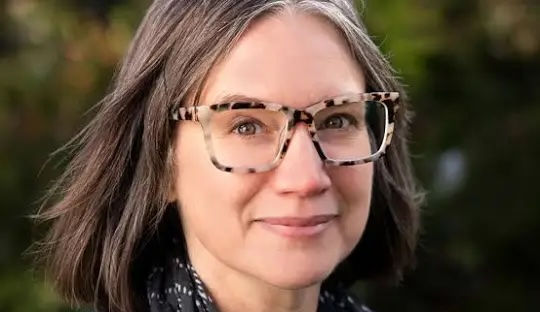
Loren J. Samons II, a Professor of Classical Studies at Boston University since 01993, earned his doctorate at Brown University. Professor Samons specializes in the history of Greece in the fifth and sixth centuries B.C., with particular interests in Athenian politics and imperialism. He is he author, co-author, or editor of six books and numerous articles on ancient Athens.His current research focuses on the figures of Pericles and Kimon, Athenian foreign policy, the Modern Greek poet Cavafy, and the composition of Herodotus’ and Thucydides’ histories. His work has often focused on potential lessons about current (and future) government and society derived from the study of ancient Greece and Rome.
Professor of Classical Studies, Boston Universit

Lucas Perry works as Project Coordinator for the Future of Life Institute. He focuses on enabling and delivering existential risk mitigation efforts ranging from direct interventions, to advocacy, and enabling research. Lucas was an organizer of the Beneficial AI 2017 conference, worked on a nuclear weapons divestment campaign, and has spoken at a number of universities and EA events. His AI activities have included grant making in the field of AI safety, a podcast on AI safety and value alignment, and work on the conceptual landscape of the value alignment problem. He studied philosophy at Boston College and has been working in AI safety and existential risk ever since.
Project Coordinator, Future of Life Institute.

